

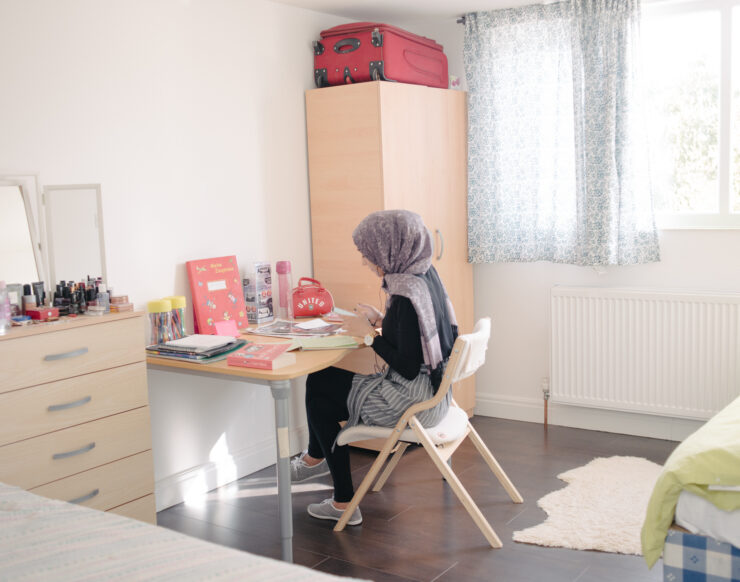
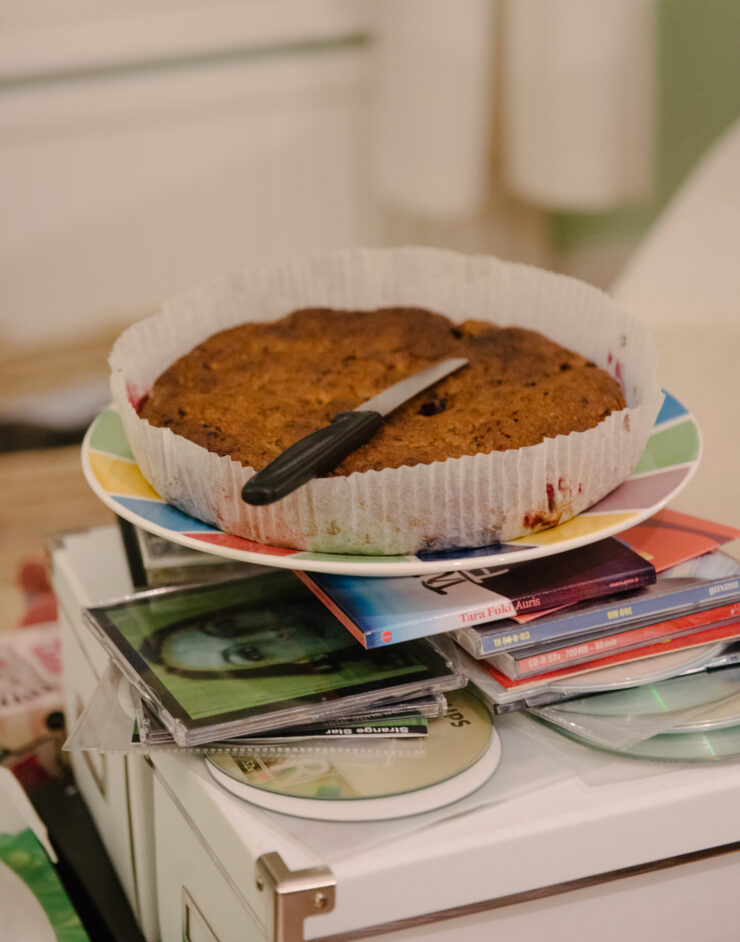
A collection of twelve stories highlighting the key emerging themes of the research from the experiences of both those that are 'new' to Europe and those that 'welcome' them.
Amidst all the risks and challenges of (forced) migration, moments of hospitality can make a decisive difference for newcomers who have to negotiate not just the logistics of arrival but equally the social and emotional process of building a new home in a foreign place. Hospitality can show in major acts, and minor gestures can manifest in political action or in a friendly exchange, as a helping hand or a smiling face.
HOSPITALITY AS WELCOME
In Athens, Berlin and London, various local organisations and transnational initiatives have tried to make the cities more hospitable for newcomers, aiming to provide practical help and emotional support whenever needed. Almost all newcomers remembered meaningful moments and interactions that created a more welcoming environment for them.

Last week, we had our 100th family stay with us since we opened seven years ago. It might not seem like a big number, but it’s not a small one for an accommodation centre with only 12 rooms. Estia Prosfygon was built back in 2011 to host asylum seekers, particularly single-parent families and mothers with babies, and it became a model for the Ministry as they opened other hostels during the crisis. We treat our residents as people that have a past, present and future, rather than as victims. No matter how vulnerable a family is, we try to see them within a context and create an everyday life for them. They may need a whole month just to sit back and clear their head, especially if they come from Moria.*
*Moria is an overrun and poorly serviced refugee camp on Lesbos island.
(Yannis, Athens)

Integration works through language. I used to speak a lot of English when I joined the house, but someone told me a statistic that the better German you speak, the better your integration into society. Now I always start in German and then sometimes, if needed, I translate into English. The second issue is security. The more people are traumatised the less they can integrate. That you have to really take into account.
(Julia, Berlin)
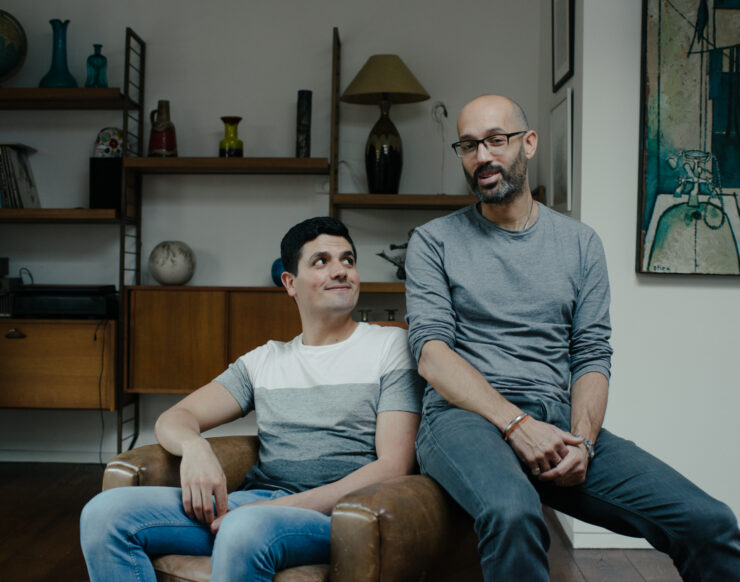
I was so surprised that anybody would just give a room in their house to a stranger. It’s not easy to have a stranger around. I’m glad the children were small otherwise it may have been tricky for them. And it was tricky for me, because they were letting me stay for free, so I felt uncomfortable*. They are Jewish actually, but Iranians don’t have any problems with Jewish people — that’s only the talk of the government. So, I was very lucky with them. I stayed there for one year, until I could afford to get my own place. If it wasn’t for Miki’s family, I wouldn’t have been able to save any money. I wouldn’t have been able to send money to my family, or to my brother in Athens. And I wouldn’t have been able to do the security guard training. But it was time to free up the room for somebody else, and also to move forward with my life, to be independent.
* ‘The word he uses is very Iranian — it's somewhere between shyness and being embarrassed’, explains Catherine
(Reza & Catherine, London)


When we arrived in Berlin, there were so many refugees here. My brother’s friend introduced us to Sven who was running Refugio. Without papers we couldn’t start learning the language, we wouldn’t be able to work and no one would just take you in, not even people who opened their homes to refugees. But Sven gave us a room for free for eight months until our papers were finalised and would regularly ask us if we needed money, too. I will never forget that.
I wanted to do something to help Refugio so I created a garden on the roof. It was my way of returning the favour. I did good work and Sven was so surprised. It was really nice because, in theory, we were the ones who needed to say ‘thank you,’ but it became him saying thank you to us, too! It reversed things from being just one way.
(Abouhanna, Berlin)
RELIANCE ON ACTIVISTS AND VOLUNTEERS
Most of the civil society workers and activists we met deplored that their efforts would increasingly be constrained due to changing politics and the limited public resources available to them. More and more work on the ground has to be done by volunteers. This often comes with its own challenges in terms of the stability of services as well as of individual well-being and fatigue. Often, newcomers themselves become volunteers, showing support and hospitality to fellow refugees who need to settle into a new city.

I love how big volunteering is here. It wasn’t just because I am a refugee and I didn’t have papers that I volunteered in the café. It isn’t a case of exploitation. Germans volunteer much, much more than we do. They volunteer alongside their job as a part of their life and work for free for an organization like Refugio. Thank heavens for all this. I was able to create a community with these people. And it helped improve my command of the language. Interacting with different people is so important.
(Abouhanna, Berlin)

The founders, Laura and Ester, drove this van to Athens from London but they aren’t based in Greece anymore. Varvara and I do the day-to-day management and coordination. There is definitely the sense of an international presence in Athens, of international voluntourists that are not connected to the city. I think it can be damaging to come here for a short time, to do work and leave; that’s why I’ve stayed here so long. For refugees, it’s a reminder that they can’t leave. For Greeks there is a feeling that people come here and only see the refugee crisis and don’t see the Greek crisis, don’t engage or show respect to Greeks.
(Megan & Varvara, Athens)

I’m the only member of the team who has been with Mobile Info from the beginning. It’s a one-man structure. I find myself at a personal crossroad, hoping to have a more stable structure for Mobile Info and securing funding. At the moment, I am supported by interns who come in for a few months but then return back to their lives and countries of origin. None of the volunteers has been Greek. I am tired but also committed to seeing this through.
(Michael, Athens)
THE 'GOOD' REFUGEE
Lived hospitality, however, is not only threatened by scarce resources but can also come with its own conditions and, as such, is often contingent and exhaustible. Most notably, many refugees told us how their experiences of hospitality seemed to depend on how local people would judge and what they would expect of them. It is in such instances that hospitality not only becomes conditional but hierarchical. Many newcomers, however, not only saw through but actively resisted such pressures of having to fit in and to be grateful all the time, reenvisioning and creating a different, more equal form of hospitality.

The social worker assigned to us by the council reacted really horribly when the incident with Owais happened. She made it all my fault, talking about the lack of boundaries and discipline in the house. She was really mean. She put up a daily schedule on the window, stating what time we should wake up in the morning, when we should shower, for how long. Television on hour — breakfast, only 15 minutes! She made us sign the programme, not just me, all of us. We tore it up after she left.
(Leila's family, London)

We talk about human rights in the UK, and how they supported us and settled us here. We are very grateful for that. But there are other things one needs to remember. Part of the reason they brought us here is for their economy, they need workers, that is why we are also here. And you need to also remember the UK’s foreign policy, to understand the circumstances that made us leave Iraq.
(Ra'ed's family, London)

Some Germans welcome refugees as they are, with their language, their culture, religion and music. Another part of German society accepts refugees on the basis that they will ‘become like me.’ These people think, ‘they need to speak like me, eat like me, listen to the same music I listen to.’ They probably also think, ‘he should look like me too.’ Maybe they want us to dye our hair blonde!
(Anas & Muhamad, Berlin)

I had the choice of living in an apartment but I’d have to share it with 5 or 6 people. Here, I live with only 2 people and one is my nephew. Living in the camp has also helped me create networks with people, with organizations. But it can also be annoying. Many times, I’ve been sitting with my neighbours in front of our containers having tea and chatting, and you see people from organizations walking around, looking at us. Or you see volunteers that come and spend a day here just to take photos and say they’re doing something for refugees. We are not creatures in a zoo, come on! Last week François Hollande, the former President of France, was in the camp. A few weeks before that the Irish president was here and the newspaper took a photo of him speaking with me. So just so you know, I know presidents!
(Muhammad, Athens)

I think it’s important to be committed to a vision of kindness in the world. When people help other people, they shouldn’t do it because they think they are better than the people they are helping. They should help because they believe in a world where there is kindness. When I sit down with Megan to play board games, my problems are far away. I’m not good at chess but it’s my favourite because it’s based on intellect, not luck or chance. But when the volunteers from Mobile Library suggest other games, I go with it anyway, for their sake, you know. It’s the way life should be. I give a little, you give a little, everyone gives a little. That’s how we can all live together. This life is short and how we treat each other is everything.
(Ahmed, Athens)