


A collection of twelve stories highlighting the key emerging themes of the research from the experiences of both those that are 'new' to Europe and those that 'welcome' them.
The possible benefits and harms of digital technologies for displaced people and migrants have attracted enormous public attention in recent years. The smartphone gave rise to hostility and suspicion towards those arriving at European shores – in the eyes of some media and publics, their selfies and smartphones provided evidence of privilege and lack of vulnerability. On the other extreme, the smartphone and the skills that newcomers demonstrated by digitally navigating new lands, new cultures and new job markets enhanced welcoming acts by other media and publics.
FUTURE PROSPECTS
Digital skills were at the heart of many ordinary conversations we witnessed in the three cities. For many, these conversations were tied to their desire and hope to use digital skills to secure a job, thus a better future in Europe. In Berlin and London, many of the young people we met were planning, one way or another, to make their way into the tech-industry and secure through digital work stability and potentially prosperity.

There were so many digital initiatives to help newcomers in Berlin at the beginning of the ‘crisis.’ The refugees were media savvy and so technology was a way to help in a relevant way.
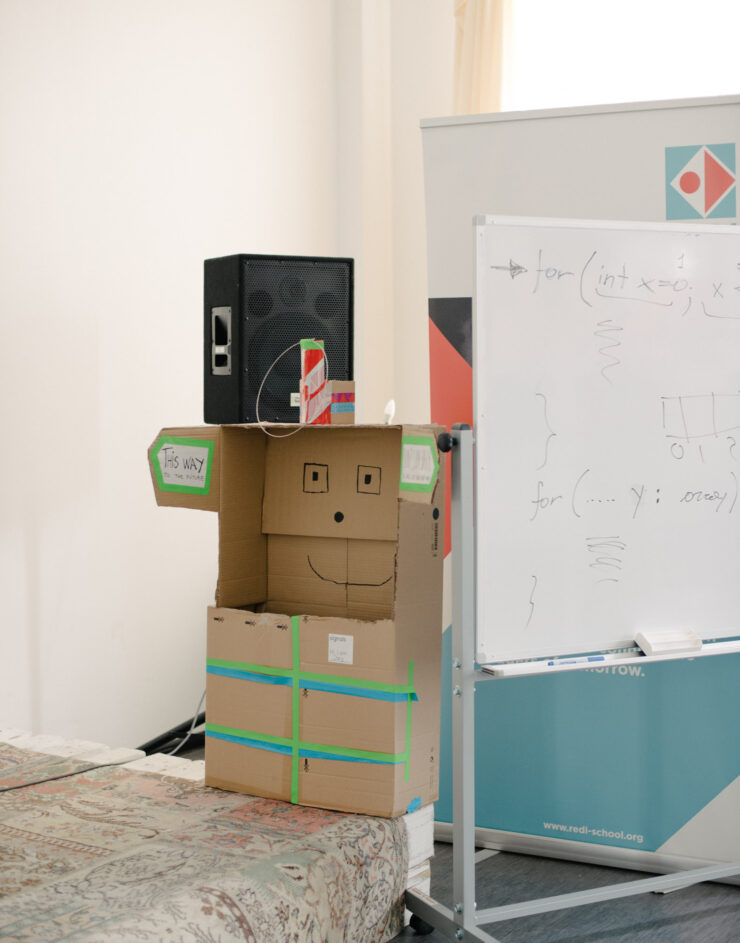
ReDI focuses on digital training, offering beginner to advanced classes in coding, digital literacy and design, among others. ReDI has only been around since 2016, but we already have partnerships with Microsoft and Facebook and have been recognised by the government. Both Mark Zuckerberg and Angela Merkel have visited us. We recently did a survey and found that 25% of our alumni that responded are now working in IT and more than 50% are or have been in internships in the digital sector. For us, digital skills are the tools but the goal is integration. It is a School of Digital Integration.
(Ida, Berlin)

There are lots of opportunities in coding in London and I want to make the most of the opportunities here. I graduated from Code Your Future a few months ago, and now I’m developing my graduation project, which they’re paying me for. It’s an excellent course to increase knowledge and real application of tech that is used in the industry right now. And it’s the only free coding school I know of. When I worked in hospitality I used to look for jobs on Indeed; now I look for them on sites for tech jobs, like hired.com.
(Reber, London)
I am really proud of the work of the Digital Women Program. There was limited participation from women before 2018 — the advanced coding class currently has 158 people, 91% of whom are men. Women who join this course are mostly interested in learning basic skills and very keen to learn about digital security as they are concerned with their children’s safety online. Most women students use WhatsApp and this is also how we connect with them and communicate classes and information. We’ve trained about 100 women so far by creating a safe space for them, offering childcare and a supportive environment.
(Ida, Berlin)
At Kiron, we help refugees prepare to transfer to university by creating academic curriculums from the online courses on sites like EdEx or Coursera. You still need a high school diploma in order to qualify to go to university in Germany, that's not something that we can make up for, but we have partnerships where the students can earn the certificates for free, and then our partner universities will recognise their transcripts. Right now we have a little over 4,000 refugee students on our platform based in Germany, and refugee camps in Jordan and Lebanon.
We got a lot of press when it started because it was something really innovative. What’s cool about it is that digitalisation in education can really support a lot of disadvantaged groups in society, not just refugees, and we're working with the Government now to expand the program.
(Sophia, Berlin)
DEMOCRATIC SPACES
We met people who found employment and education opportunities because of their digital skills, but this also came with its own ‘baggage.’ The image of ‘the good migrant’, familiar through the repeated representations of the successful newcomer in the media, has increasingly been transformed into ‘the good digital migrant’: the newcomer who makes it in the digital economy, who is technologically savvy, an innovator and a prospective entrepreneur. Young men, especially, felt that they could fit this model while others – especially women and elderly – felt even more insecure knowing that, yet again, they would fail to make things work for them. Some of the civic actors engaged in the digital world are aware of these complexities and acts of solidarity attempt to bridge a more democratising space.
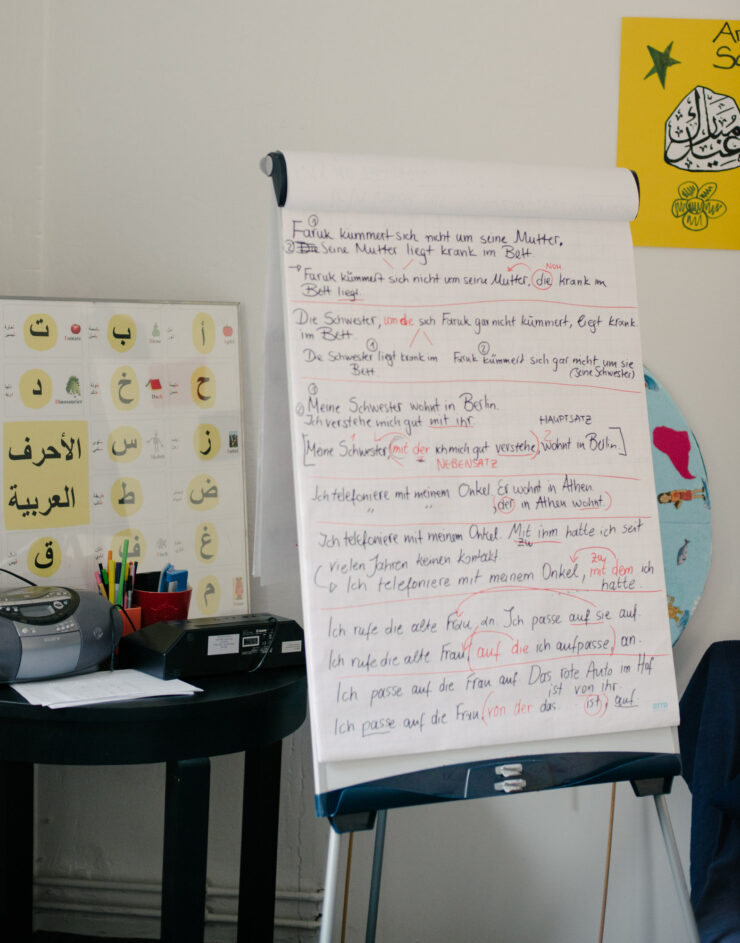

We started offering computer skills in the early 1990s — I remember we drove all the way to Hamburg to pick up donated computers. The women were proud because computers were something new, they felt like they learnt something nobody else in the community knew. They would say, ‘I know something my husband doesn’t know.’ All the computers are still here, but no one is interested, it’s all smartphones now.
The digital emerges a lot in our open forums. Parents feel children spend too much time online and have too much access. So we developed a course teaching them how to look at browsing histories, how to block websites and enable parental controls. It’s important to recognise that this is not an issue that is particular to the Arabic community or refugees. Parents are dealing with this all over the world. We are addressing it using Arabic rather than German, but we speak about it as a global problem not a cultural one.
(Renée, Berlin)
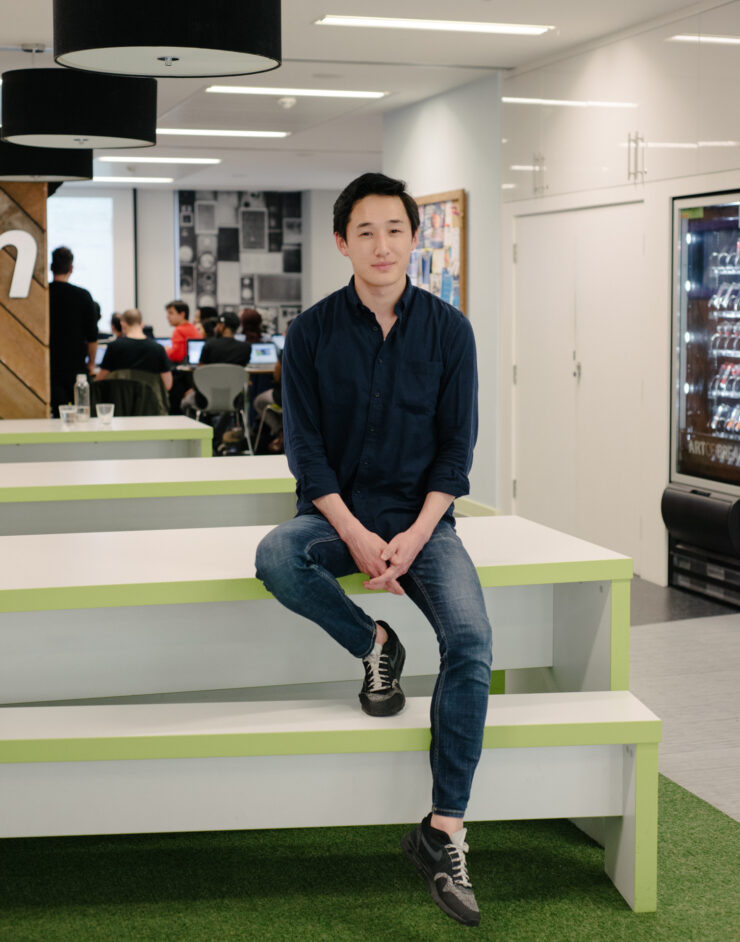
Code Your Future is a community first and coding school second. It was started in early 2017 by Herman, my co-founder, as a response to the lack of anything real materialising from the big promises made by the tech sector to help refugees. Our goal is to support students all the way until they find a job in the industry. We don’t ask to see their papers or verify residency, we don’t care as long as they are people interested in tech and need support. I'd like to think that through this experience, I now have a much better understanding of what an open community means. And by that, I don't mean just welcoming, but honest — about our intentions, goals and failures.
(Max, London)
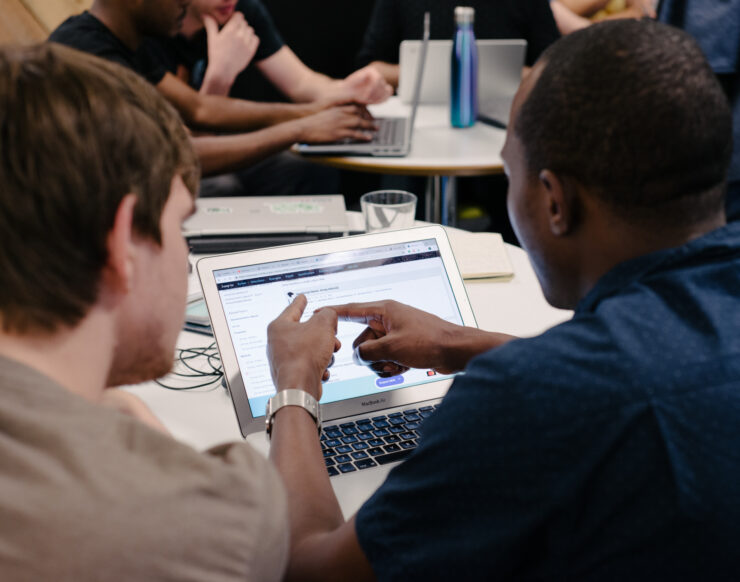

You rarely see refugees on the floor of tech conferences or hackathons that seek to address issues affecting them. A lot of very well-meaning people are giving their time to develop projects to help, but there aren’t any refugees in the room to point them in the right direction. I’d like to see companies concentrating on inclusivity and empowerment, involving more refugees in developing solutions built, not for them, but with them, technological or otherwise.
(Max, London)
RAISING DIGITAL VOICE
In addition to digital skills for employment, there was another kind of digital skills that many had and many desired: those skills to speak back to the society in one’s own voice and against overwhelmingly negative and stereotypical media representations of migrants in the mainstream media.

It’s important to realise as well that, as migrants, we have a space in that digital environment, to not only receive and be fed information, but to be creators of it. Some of our projects emphasise the concept of digital citizenship and how it affects migrant families. It’s not just about how to use Wi Fi or the iPad, we’re asking them to take that extra step: How can you become a creator of information? How can you share your views widely? How can you participate in digital civic life? This is a long-term view, I suppose, but this is the way that we should be seeking to break the cycle of polarisation, of hate crimes. The more agency we have, as migrants and as British people, the more we can create a world that reflects who we are and who we want to be in this space.
(Sheena, London)

You have to fight the media. I mean, this library can be described so differently depending on who writes the story. This is why we try to use our own platform on Facebook to talk about the library on our own terms and we’re very selective about interview requests. When people support a creative project because it is for or by refugees, even though it helps to spread the word, it disrespects the creative act itself. We want the initiative to be judged on its own merit, on the cultural value of its experimentation.
(Ali, Dana & Juan, Berlin)


