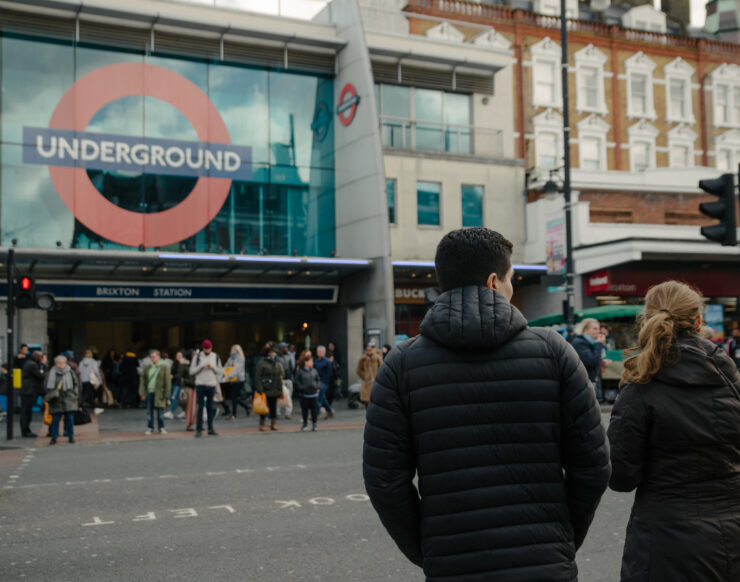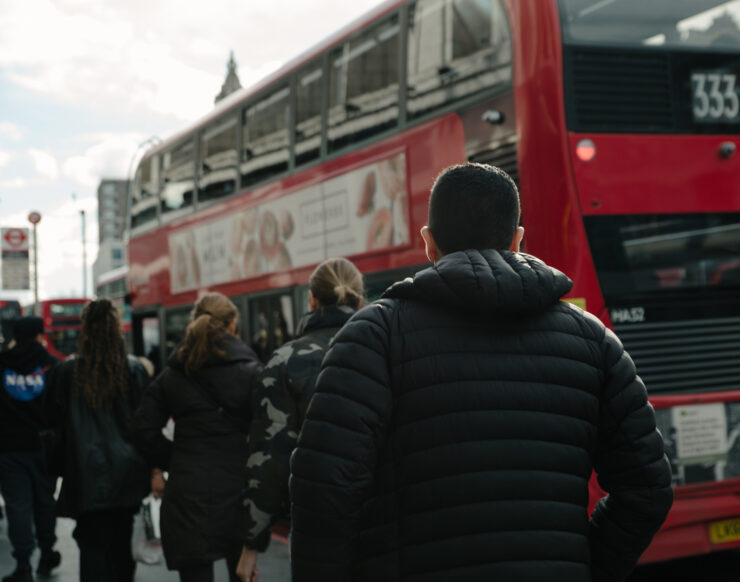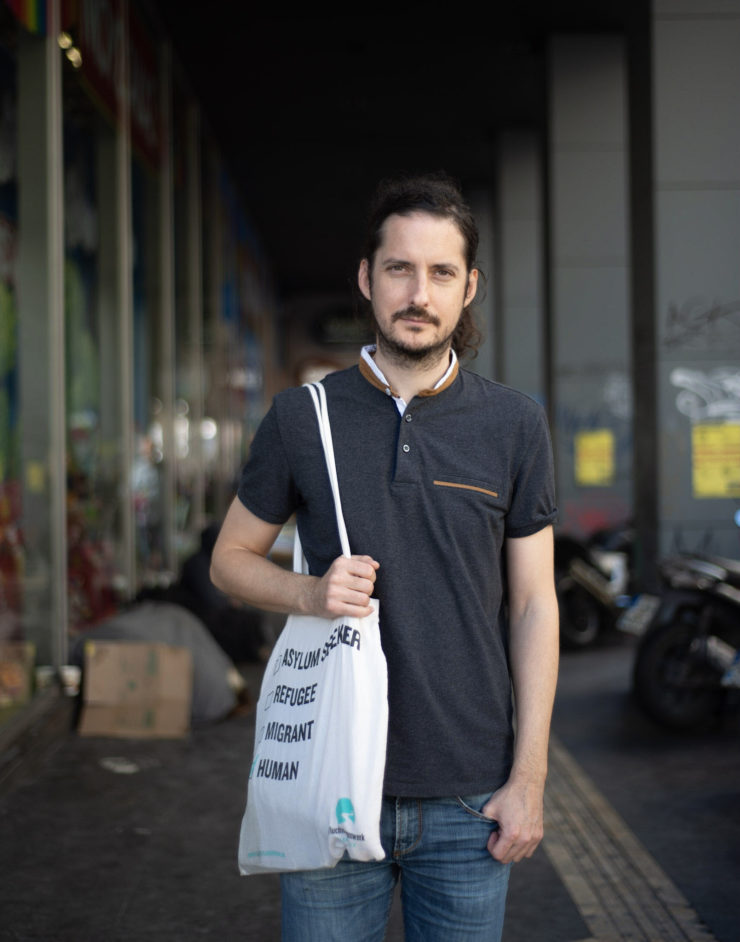


While some experiences are universal, some are particular to the historical, political and social contexts of each city. What does the digital city of refuge look like in Athens, Berlin and London?
London is arguably the most diverse city in the world with less than half of its population belonging to the national minority. But right now, London as a city of refuge does not reflect the deep histories of its alterity. Newcomers who have been offered refuge in London post-2015 are numerically insignificant and their acceptance has been conditioned to very strict rules of abject vulnerability; in fact, the British government only received refugees within the Vulnerable Persons Resettlement Programme and a very few among this narrowly defined group has been allowed to settle in London. As newcomers have been recognised only on the basis of vulnerability, their humanity has largely been reduced to bare life. Even basic needs are only just about met as the politics of (post-)austerity and of the hostile environment have deprived refugees of even the most fundamental resources, such as health and education.
LONDON: A DESTINATION, BUT A HOSPITABLE ONE?
The London newcomers who have arrived in the context of the “refugee crisis”, have been welcomed on the basis of their vulnerability and by a state that recognised them as “survivors”, not as people with agency and with “the right to have rights” (Arendt 1949). Ironically though, the system of abjection that gave people the right to enter the country was swiftly replaced by a system of entrepreneurialism after arrival: a new set of requirements were soon imposed to those received as refugees. Within a period between one and three years, they were told, they had to prove their right to stay by passing demanding language tests, securing employment, and demonstrating that they pose no threat or burden to the state by depending on welfare or becoming engaged in criminal activities. Thus, an impossible set of contradictory requirements has been imposed upon them: they first had to prove their abject vulnerability and soon after their ability to swiftly transform and assimilate.
This expectation of a rapid transformation has been monitored and regulated through institutions that are meant to provide welfare and support, such as the Job Centre and local authorities. But refugees’ expectations have been met with hostility and suspicion. Hoping for recognition and dignity, many have instead been presented with rigid data profiles recording how they perform and regularly being reminded that they have to make their own way into society. On the backdrop of these requirements, newcomers are denied access to full-time education, which could help them secure a better future, and their access to part-time education is tied to a contract stating that they should abandon their studies if this competes with any full-time job. Unsurprisingly, the contradictory demands the state puts upon people’s lives causes enormous anxiety among many who feel constantly monitored but rarely supported.
When you get asylum, the government gives you four weeks to leave their housing, and all the support stops. So I had to find a house and job, but I didn’t speak English and I didn’t know what to do, and nobody could help. I didn’t want to stay in Liverpool, it was depressing. There are a lot of people that don't like immigrants there, and they would come and throw stuff on the door of our house.
Many people want to come to London but they don't know how to do it, where to start, and it’s more expensive so you need to have a job first. If Catherine wasn’t in London, maybe I wouldn’t have come here. I went to visit her a few times and she helped me look for a flat but everything in my budget was awful. In Iran, they build little rooms on the roof for pigeons, and that’s what these places reminded me of. But then she helped me to meet Refugees at Home and I got to live with Miki and his family in their home. That’s how I got to London.
(Reza & Catherine, London)
LONDON AS A DIGITAL CITY OF REFUGE
Digital communication is cherished among newcomers: many say that it is a lifeline, others note that it is a gateway to invaluable and necessary information, and all agree that it is the connective link necessary in a life interrupted, bringing loved ones closer, at least virtually. Everyone is digitally connected, as connectivity is a priority for individuals and families. It is a priority, and even when trying to balance a limited income, “the internet” comes high up among the basic needs that need to be met. A need for communication and for dignity, digital connectivity is not recognised as such by the state. In fact, the state considers media and digital connectivity as luxury items, thus it forbids their public provision to refugees being offered housing in London and across the country. Finding ways to connect the best way they can (often by using public WiFi alongside basic personal connectivity), newcomers navigate the city and their new life digitally. They use apps like GoogleMaps to navigate the city and compensate for the abandonment by the state, which offers no to very little information. They engage in user-generated content and peer-to-peer information sourcing and crowdfunding, especially through social media. Newcomers have created an online ‘Index,’ a guide that provides everyday information on life in London for migrants, information that is often basic but life-changing, as for example, on how to apply for free public transport when disabled. Digital communication is essential to everyone we met and digital resources are considered vital but unsafe and untrustworthy, and there is uneven awareness of their surveilling power. Basic media literacy is developed organically and shared among refugees, while advanced media literacy is supported by coding schools that offer free training for digital work. Neither, of course, is enough: as public provisions of connectivity, of job opportunities, education and training are scarce, the prospect of settlement with a sense of security and dignity remain uncertain.