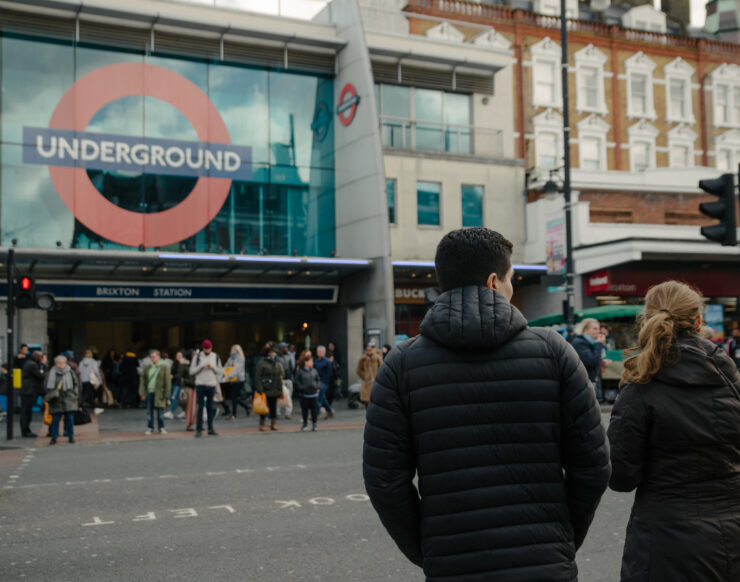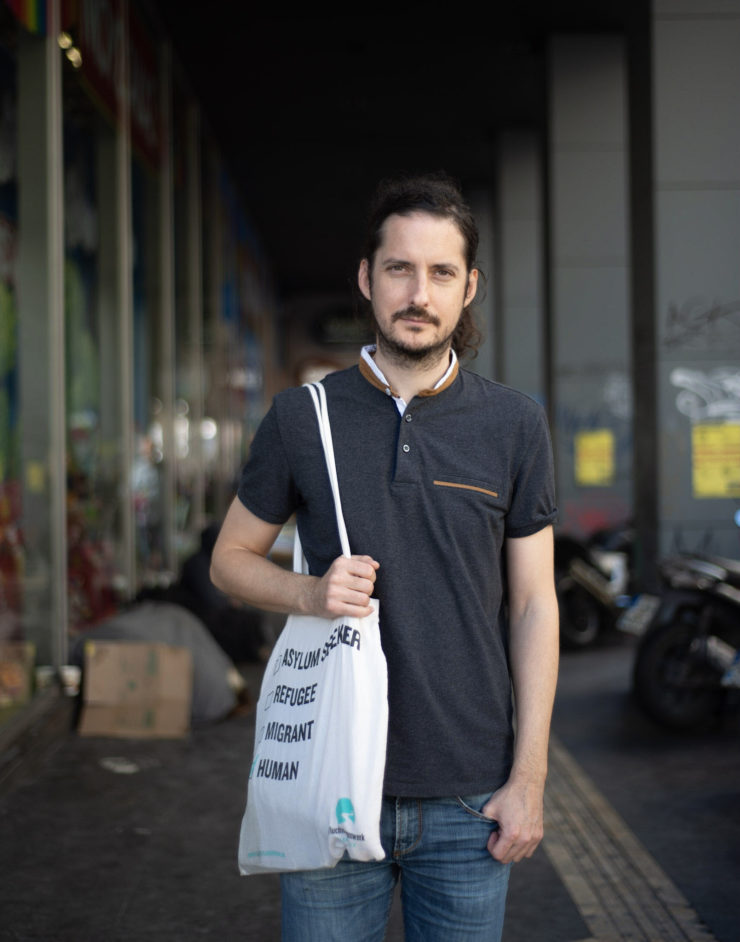


While some experiences are universal, some are particular to the historical, political and social contexts of each city. What does the digital city of refuge look like in Athens, Berlin and London?
Athens represents the first arrival city in many refugees’ European journey and estimates show that it hosts half of the approximately 60,000 newcomers stranded in Greece since 2015. Athens is the most contradictory city of all three in this study: a European destination but also a city of compounded crises, it reflects the contradictions of neoliberal Europe.
ATHENS: A DESTINATION OR THE PERPETUATION OF PRECARITY?
Athens as a city of refuge is constituted through the temporariness of everything. Structures and provisions of reception and rights are characterised by temporariness, with the state taking years to process asylum and family reunification cases and with prospects of permanent residency and employment being almost non-existent. Temporariness drives the imagination of newcomers too, as almost everyone we encountered perceives Athens as a stopover in an incomplete journey, with a desired destination in Northern Europe.
There is a paradox in these experiences and imaginaries of temporariness, which have transformed urban life into a perpetual space and time of suspension: more and more newcomers have come to realise that Europe has sealed its internal borders, that red tape has become a way to control migration through bureaucratisation and that Greece, as a country experiencing a crisis within a crisis, has become an inevitable, even if unrecognised, destination. Such practices of governance have elsewhere been identified as “a politics of waiting” (Joronen 2017); that is, rights are in principle recognised but in practice not activated. In Athens, the state’s inaction is, in fact, the enactment of EU policies, and this plays out in two ways: first, it is EU policy that is driving the containment of migrants in Greece and the deterrence of their mobility to the north (such inaction means that migrants are neither here to stay nor do they know if they will go); second, Greece’s punitive austerity programme is also imposed by the EU (this leads to a different kind of inaction, a contraction of the state from the protection of rights and the provision of services).
CRISIS WITHIN A CRISIS
Lack of clarity on the future perpetuates migrant precarity and despair and fuels xenophobia against the “strangers” who are present in the city but not settled. Within a regime of inactivity and uncertainty, new solidarities and forms of action have emerged. In fact, Athens, more than Berlin and London, is a city of both despair and freedom. Athens’ disordered spaces and a-legality driving many migrants’ everyday life means that rules of containment are constantly challenged. For example, temporary and informal housing, such as in the case of squats organised by anarchist and radical Left groups, offered migrants some security when they initially arrived; illegal markets in the city’s underbelly compensate for the lack of any other prospects for income; and networks of solidarity provide for what the state does not offer, including anything from internet connection to legal aid, health provisions and hot food to the large numbers of migrants that are homeless and living on the streets.
ATHENS AS DIGITAL CITY OF REFUGE
The digital reality of Athens reflects the contradictory reality of the neoliberal city. Access to digital connectivity is precious for sustaining human contact with loved ones and necessary for responding to migration bureaucracy, which is fully online. But reliable access is scarce and most participants depend on precarious connectivity. For example, an app that provided free Wi-Fi access, and which newcomers depended on for vital information and communication, has been disabled. Diminishing digital access comes with increasing digital surveillance and datafication of their lives. Collection of biometrical information and incomplete data profiles generated at the European border will determine not only access to rights at present but also in the future, with their prospect of mobility and settlement in Europe remaining subjected to the digitised identities produced for migrants but with them having no control over them. Unequal control and access to data and technologies raise questions about migrants’ communication rights and highlights the urgent need for civic society and international organisations to protect them.
REFERENCES
Joronen 2017