

Get to know the newcomers, activists and volunteers we met in Athens, Berlin and London and their unique experiences of refuge, welcome and the digital city.

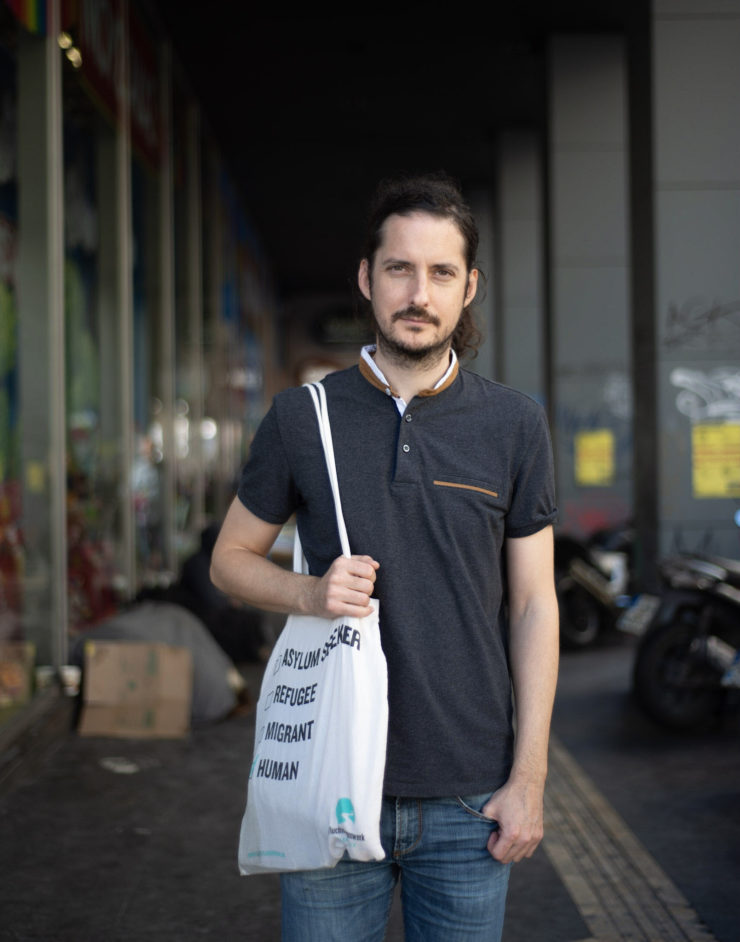
Michael, Mobile Info Team
Monastiraki, Athens, November 2018
I arrived in Greece in March 2016, when the borders were shutting and restricting refugee mobility towards Northern Europe. Misinformation was rampant and rumours were going around about borders opening when they weren’t. Three information initiatives emerged at the Idomeni informal camp, eventually merging as Mobile Info Team.
I’m the only member of the team who has been with Mobile Info from the beginning. I find myself at a personal crossroad, hoping to have a more stable structure for Mobile Info and securing funding. At the moment, we are a team of volunteers who stay for up to six months. We hope that we will be able in the future to also hire and employ people.
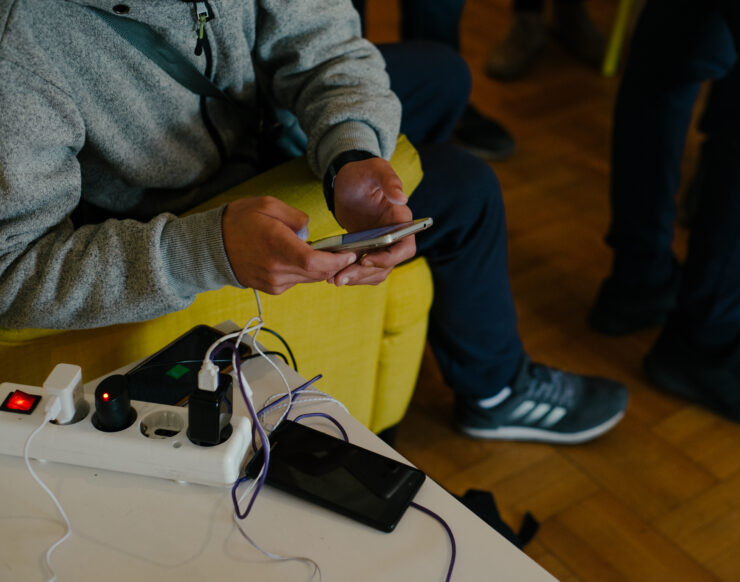
We offer advice on asylum applications, and the process of registration and pre-registration, largely digitally. Most of our communication happens on Facebook — we have nearly 50,000 followers. We’ve also created info materials for asylum seekers and refugees about for example family reunification, the asylum interview or assistance for LGBTQI+ asylum applicants. Working digitally allows us to maximise impact with very limited resources.
The legal process is dire and there is no political will for real change. All refugees arriving by land, for example, have to pre-register on Skype. Sometimes it can take months, even more than a year, just to get an initial Skype appointment and so many people don’t have access to a reliable internet. And there are many fake Skype accounts running scams. Many are in Urdu and they present themselves as official sites for pre-registration, and then use the documentation of newcomers to falsely apply for asylum.